
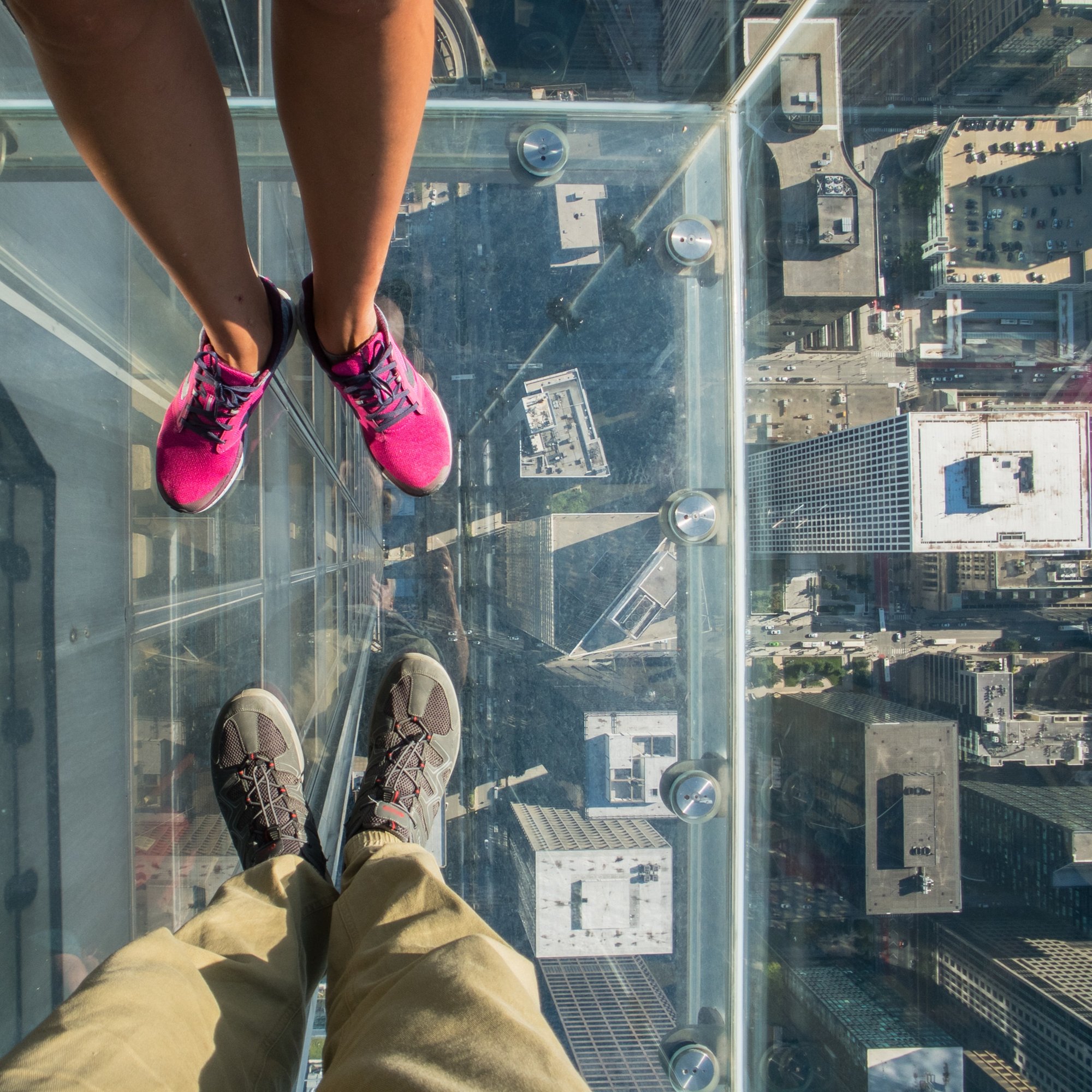
Facing a fear of heights feels a lot like retraining your brain. It’s a mix of learning how to cope in the heat of the moment, challenging the stories you tell yourself, and then, crucially, dipping your toes back in the water through controlled, gradual exposure. This isn’t about flipping a switch; it’s about building genuine, lasting confidence one small step at a time.
Your Journey From Fear to Freedom Starts Here

Imagine standing on a scenic peak in the Brecon Beacons or sipping a drink at a London rooftop bar without that familiar, gut-wrenching knot of anxiety. This isn’t just a daydream; it's an achievable reality. The intense fear of heights, officially known as acrophobia, is one of the most common phobias out there, but the good news is that it’s highly manageable with the right game plan.
This guide is your practical, no-nonsense roadmap to taking back control. We’ll walk through real strategies, step-by-step, designed to put you back in the driver's seat.
Understanding Your Starting Point
If you've ever felt your heart pound or your palms sweat when looking out of a tall building, you're in good company. That feeling of sheer panic when you’re near an edge is something a huge number of us have experienced. In fact, nearly 25% of the UK population admits to being 'very afraid' of heights, and another 35% are 'a little bit afraid'. That makes acrophobia Britain’s number one phobia—yep, even more common than a fear of spiders.
But here’s the statistic that really matters: the gold-standard method for tackling phobias, known as exposure therapy, has success rates as high as 90%. That’s a massive vote of confidence that with a bit of structured effort, real change is entirely possible.
The goal here isn't to erase fear completely—a healthy respect for a long drop is perfectly natural. It's about stopping that fear from dictating your life and shrinking your world.
To help you get started, here’s a quick overview of the toolkit we’re going to build. These are the core strategies you'll learn to manage the anxiety and gradually push your boundaries.
Your Fear of Heights Toolkit at a Glance
| Strategy | What It Is | When to Use It |
|---|---|---|
| Immediate Coping Skills | In-the-moment techniques like deep breathing and grounding to calm your physical panic response. | The second you feel anxiety kick in—whether on a bridge, a balcony, or even just thinking about heights. |
| Cognitive Reframing | The process of identifying, challenging, and changing the anxious thoughts that fuel your fear. | When you catch yourself spiralling into "what if" scenarios or catastrophising about the worst-case outcome. |
| Graded Exposure Ladder | A personalised, step-by-step plan that gradually introduces you to heights in a safe and controlled way. | This is your long-term roadmap. You’ll use it during planned practice sessions to build confidence over weeks or months. |
| Positive Association Building | Using fun, low-risk activities (like indoor climbing or a scenic cable car) to create new, positive memories with height. | Once you've made some progress and want to solidify your confidence in a real-world, enjoyable setting. |
This toolkit is designed to give you control at every stage of the journey. You'll have what you need to manage panic attacks right when they happen, and a clear plan to build the kind of confidence that sticks.
A Practical Plan for Progress
This guide is structured to help you move forward methodically, without feeling overwhelmed. Think of it less as a giant leap and more as a series of manageable steps up a ladder.
Here’s a sneak peek at what’s coming up:
Immediate Coping Skills: We'll start with practical techniques you can use to manage the physical symptoms of panic the moment they strike.
Rewriting Your Script: You’ll learn how to tune into those anxious thoughts and actively challenge the stories your brain is telling you.
Building Your 'Exposure Ladder': I'll show you how to create a personalised plan to face your fear safely, starting with something that feels tiny and working your way up.
Turning Fear into Fun: We’ll explore some brilliant UK-based experiences, like indoor climbing centres and high ropes courses, that can turn practice into a genuine adventure.
As you start this process, it helps to understand the bigger picture of how to overcome fear and reclaim your confidence in any area of life. This is your path from being controlled by fear to living freely, and it all starts right now.
Calming the Storm with In-the-Moment Techniques

When that sudden, dizzying wave of panic hits you in a high place, it feels completely overwhelming. Your body's fight-or-flight response kicks into overdrive – a primitive survival instinct that can’t tell the difference between a secure balcony and a life-threatening cliff edge.
The key to getting a grip isn't to fight this response. That’s a losing battle. Instead, you need to gently guide your body back to a state of calm using practical, in-the-moment techniques.
These methods work by interrupting the physical panic cycle. When you feel anxious, your breathing becomes shallow and your heart rate climbs, which tells your brain there’s a real danger. By consciously taking control of your breath and senses, you send a powerful signal back to your brain that says, “I am safe.”
When intense fear strikes, knowing how to calm down fast is your first line of defence. These strategies give you the tools to manage that initial surge of fear before it takes over.
Master Your Breathing to Slow Your Heart Rate
The most immediate tool you have is your own breath. Uncontrolled, shallow breathing quickly leads to hyperventilation, which only amplifies feelings of panic and dizziness. The ‘4-7-8’ breathing method is a simple but profoundly effective way to counteract this.
Here’s how to do it discreetly, wherever you are:
Exhale completely through your mouth with a gentle whoosh.
Inhale quietly through your nose for a mental count of four.
Hold your breath for a count of seven. This is the crucial step; it lets oxygen flood your system.
Exhale slowly and completely through your mouth for a count of eight.
Repeating this cycle just three or four times forces your heart rate to slow and engages your parasympathetic nervous system—your body’s natural relaxation response. It’s a physiological reset button you can press anytime, anywhere. To deepen these skills, you could even explore something like a mindfulness day retreat to really get to grips with these practices.
Ground Yourself with the 5-4-3-2-1 Method
When your mind is racing with catastrophic “what if” thoughts, grounding exercises are brilliant for pulling your focus out of your head and back into the real, physical world. The 5-4-3-2-1 method is a sensory exercise that does exactly this.
It works by systematically engaging each of your senses to anchor you in the present moment, making it much harder for anxious thoughts to take hold. You don’t need to say a word; just run through this checklist in your head.
This technique is about observation, not judgement. You're not analysing whether you like the things you sense, you are simply acknowledging they are there. This act of neutral observation starves anxiety of the fuel it needs to grow.
Find a comfortable position and mentally identify:
Five things you can see: Look for small details. The texture of a brick wall, the exact shade of blue on a distant car, a bird flying past, the pattern on your sleeve.
Four things you can feel: Notice the sensation of your shoes on the ground, the feel of your watch on your wrist, the breeze on your skin, or the solid texture of a railing in your hand (without gripping it too tightly).
Three things you can hear: Listen beyond the obvious. Can you hear distant traffic? The hum of an air conditioner? The faint sound of people talking?
Two things you can smell: This can be tricky, but try to identify any scents. Perhaps the smell of rain, coffee from a nearby shop, or even just the clean scent of the air.
One thing you can taste: Focus on the taste in your mouth. You could take a sip of water, pop a mint, or simply notice the lingering taste of your last coffee.
By the time you finish, you'll likely find your breathing is more regular and the intensity of your initial panic has faded. These techniques aren't a magic cure, but they are essential skills for managing fear as it happens, giving you the confidence to stay in a situation rather than flee.
Getting a Handle on Your Anxious Thoughts
That heart-thumping, palm-sweating panic you feel when you’re up high? It's just the tip of the iceberg. The real engine driving your fear is the relentless chatter inside your head. It’s that non-stop stream of “what if” scenarios, painting vivid, terrifying pictures of worst-case outcomes that almost never line up with reality.
If you’re serious about overcoming a fear of heights, you have to tackle this internal monologue head-on. This is where we can borrow some incredibly effective techniques from Cognitive Behavioural Therapy (CBT). The idea is to become a bit of a detective, investigating your own thoughts, questioning whether they’re actually true, and slowly swapping them out for more balanced and realistic ones. This isn't about slapping on a fake smile and pretending you’re not scared; it's about seeing the situation for what it is, not what your anxiety is screaming at you.
Laying this mental groundwork now, in a calm environment, is absolutely essential. You’re basically equipping yourself with the tools to stay grounded when you start facing your fears for real.
Spotting Your Brain's Favourite Tricks
Our brains, especially when we’re anxious, love to fall into unhelpful thinking patterns called cognitive distortions. For anyone with acrophobia, a few usual suspects are almost always causing trouble. Just being able to recognise them is the first massive step toward taking their power away.
Do any of these sound familiar?
Catastrophising: This is the big one. Your mind doesn't just acknowledge you're high up; it leaps straight to the absolute worst possible outcome. You're not just standing on a balcony; you're picturing it crumbling beneath you. This is what happens when a tiny worry gets blown up into a full-blown disaster movie in your head.
"All-or-Nothing" Thinking: This is where everything is black and white. A situation is either 100% safe or it’s terrifyingly dangerous, with no room for anything in between. A slight wobble on a footbridge isn't just a minor movement; in your mind, it’s a sign of imminent collapse.
Emotional Reasoning: This is the sneaky trap of believing that because you feel terrified, you must be in actual danger. Your feelings become facts. The thought process is brutally simple: "My heart is pounding, therefore this is an unsafe situation."
Simply being able to put a name to these thought patterns can be a game-changer. It creates a bit of distance, allowing you to observe your thoughts instead of getting completely swept away by them.
Using a Thought Record to Find the Facts
Once you can spot these dodgy thoughts as they pop up, the next job is to actively challenge them. A thought record is a brilliantly simple but powerful CBT tool that helps you do just that. It forces you to slow down, take a breath, and look at the actual evidence for and against your fears. You're shifting from pure emotional reaction to logical analysis.
A thought record isn’t about telling yourself your fear is "stupid" or "wrong." It’s a structured way to get an accurate read on the threat level, helping your rational brain get back in the driver's seat when your primal fear response tries to take over.
Let’s walk through a real-world example. Imagine you’re standing on a fifth-floor balcony at a modern hotel and this thought hits you like a ton of bricks:
Anxious Thought: "This balcony isn't safe. It feels flimsy, and I'm going to fall."
Now, let's put that thought on trial using a simple record.
| Evidence FOR the Anxious Thought | Evidence AGAINST the Anxious Thought |
|---|---|
| It feels really high up. | This hotel was built to strict UK building regulations and safety standards. |
| I can feel a slight vibration when I move. | Millions of people use balconies like this every single day without a problem. |
| My body is screaming at me that I'm in danger. | The structure is solid concrete and steel, engineered to hold many times my weight. |
| There are high, solid railings specifically designed to prevent falls. |
When you lay it all out like this, the imbalance becomes glaringly obvious. The "evidence" supporting the fear is all about subjective feelings. The evidence against it is rooted in cold, hard facts, engineering, and logic.
This process helps you craft a more balanced, alternative thought. Instead of "This isn't safe," you can reframe it as: "Even though I feel anxious right now, I know that this balcony is structurally sound and designed for safety. My feelings are not facts."
Making a habit of this, even when you're just thinking about heights from the safety of your sofa, trains your brain to automatically question those anxious thoughts. It builds a kind of mental muscle memory, giving you a rational voice to shout down the whispers of panic.
Building Your Personalised Exposure Ladder
Right, you’ve started challenging those anxious thoughts. The next piece of the puzzle is to gently, and methodically, reintroduce yourself to heights in the real world. We do this using a proven technique called graded exposure, which is a fancy way of saying you’ll face your fear in small, manageable doses. The best way to map this out is by creating your own personalised ‘exposure ladder’.
Think of this ladder as your unique roadmap to feeling confident. It’s simply a list of 10 to 15 situations involving heights, which you’ll rank from the least intimidating to the most terrifying. This approach keeps you in the driver’s seat at all times—you only move up to the next rung when you feel completely ready.
Just the act of building your ladder can feel empowering. It takes a huge, vague fear and breaks it down into a series of concrete, achievable challenges you can actually tackle.
Designing Your Ladder Rungs
First things first, grab a pen and paper (or open a new doc) and brainstorm a list of activities that trigger your fear. Don't hold back or censor yourself here. Write down everything from the seemingly trivial (like standing on a kitchen stool) to the things that currently feel unthinkable. The aim is to get a wide range of options to work with.
Once you have your list, it's time to rate each one using the Subjective Units of Distress Scale (SUDS). It's just a simple 0-100 scale where 0 is total calm and 100 is a full-blown panic attack. Go through your list and give each item a SUDS rating based on how much anxiety you think it would cause you.
0-30 SUDS: These are your low-hanging fruit. Mild anxiety, but you know you can handle it. These will be the bottom rungs of your ladder.
40-60 SUDS: This is where you’ll feel noticeable discomfort. These activities will make up the middle of your ladder.
70-100 SUDS: Proper heart-thumping, sweaty-palms territory. These are your top-rung, long-term goals.
Make sure your ladder has a gradual climb. A massive jump from a 20-point activity straight to a 70-point one is a recipe for feeling overwhelmed. You want small, consistent steps of around 5 to 10 points between each rung.
The whole point is to build on your successes. As the flowchart shows, you’ll be using your new thought-challenging skills on every single rung.
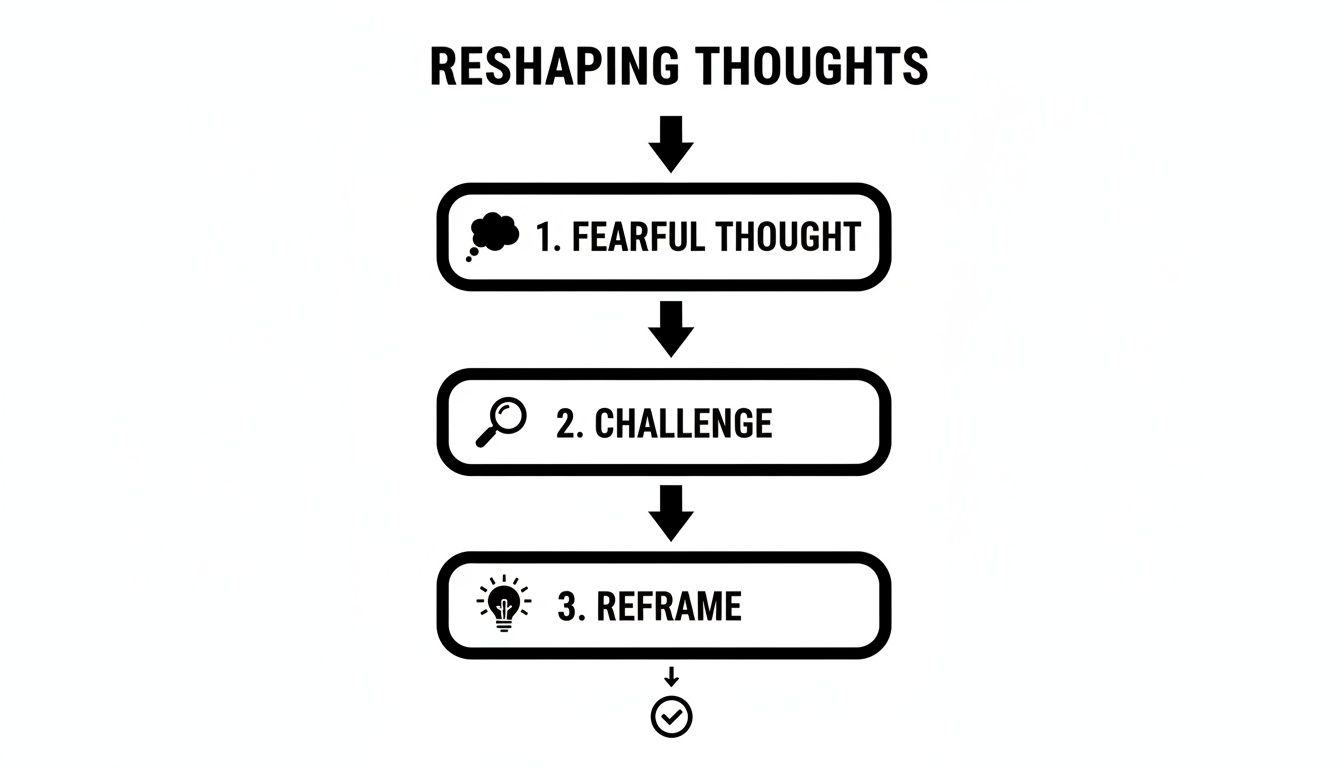
This process—spotting the fear, questioning it, and reframing it—is the mental muscle you'll flex as you physically start climbing your ladder.
A Sample UK-Based Exposure Ladder
Everyone’s ladder will look different, of course, but seeing an example can help get the ideas flowing. Here’s a sample one with a variety of UK-specific situations, starting with things you can do from your sofa and slowly moving into the real world.
Here's an example of what that might look like:
| Ladder Rung | Activity Example (UK-Based) | Anxiety Goal (SUDS Rating) |
|---|---|---|
| Rung 1 | Watch a first-person GoPro video of a walk along the Seven Sisters cliffs. | Stay until anxiety drops below 10 |
| Rung 3 | Use a sturdy stepladder at home to change a lightbulb. | Stay until anxiety drops below 15 |
| Rung 5 | Stand by a second-floor window in your home or office for five minutes. | Stay until anxiety drops below 20 |
| Rung 7 | Ride a glass lift up to the top floor of a local shopping centre (like the Bullring or Westfield). | Stay until anxiety drops below 30 |
| Rung 10 | Walk across a sturdy, low-level pedestrian bridge over a river. | Stay until anxiety drops below 40 |
| Rung 12 | Try a rock climbing taster for two at an indoor wall. | Stay until anxiety drops below 50 |
| Rung 15 | Take a ride on the London Eye or Portsmouth's Spinnaker Tower. | Stay until anxiety drops below 60 |
Your own ladder might include anything from looking down a stairwell to planning a trip to the Peak District. Make it personal to you and the situations you want to conquer.
How to Climb Your Ladder Successfully
The secret to making gradual exposure work is a blend of patience and repetition. When you decide to tackle a rung, your only job is to stay in that situation long enough for the initial spike of anxiety to naturally come down. If you run away at the peak of your fear, you accidentally teach your brain that fleeing is what kept you safe, which just makes the phobia stronger.
The rule of thumb is to stay in the situation until your SUDS rating has dropped by at least half. So, if you start a task and your anxiety hits a 40, your goal is to stay put until you feel yourself calm down to a 20 or less. This process teaches your brain a vital lesson: the anxiety will pass, and you are perfectly safe.
Only move up to the next rung once you can handle the current one with very little anxiety. And if a step feels too big? Break it down. Before riding that glass lift all the way to the top, maybe you just ride it up one floor and come straight back down. Rinse and repeat.
You are in control of the pace. This is your journey.
Turning Practice into Positive Real-World Experiences
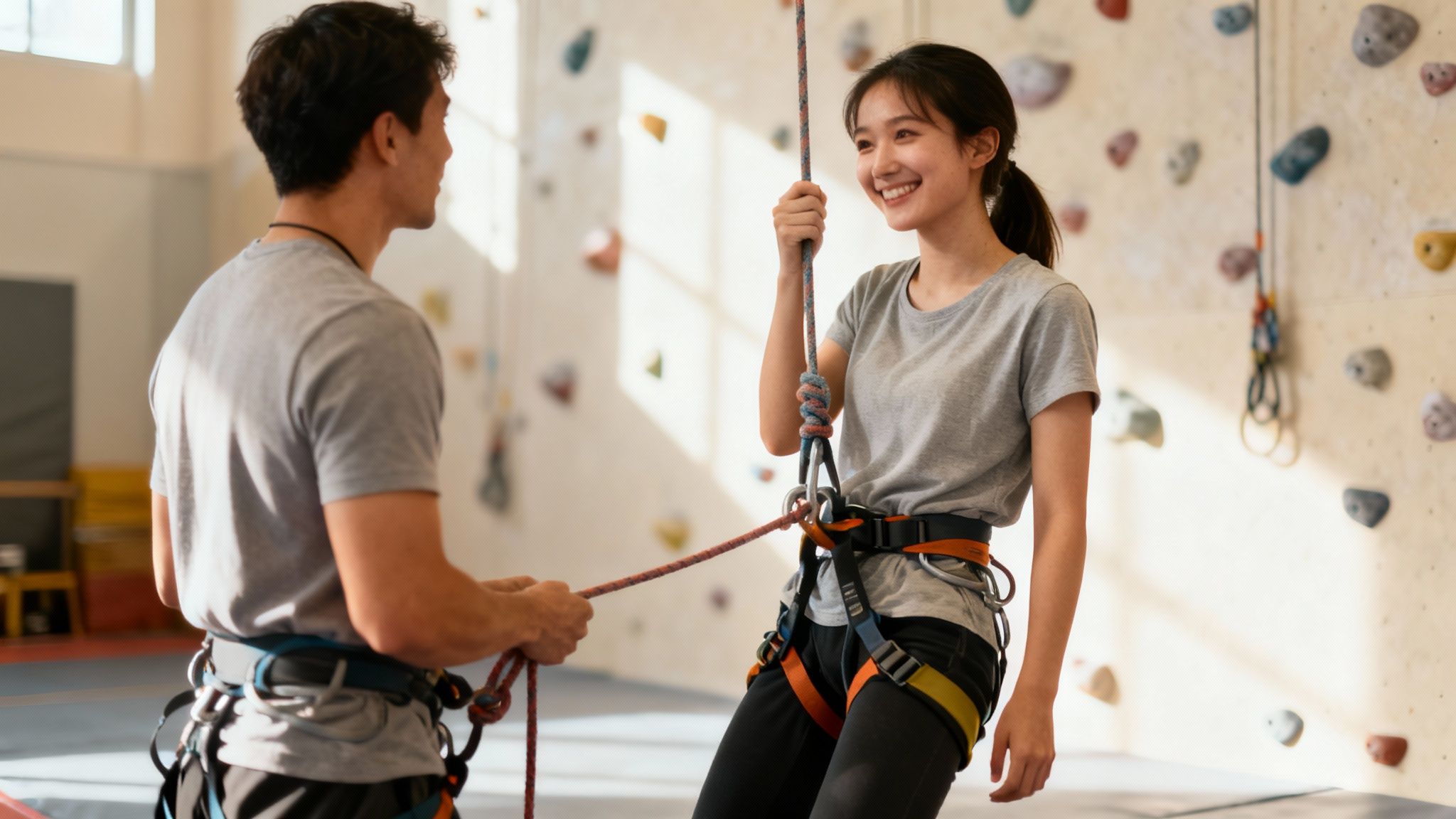
You've done the mental prep, and your exposure ladder is mapped out. Now comes the best part: turning all that theory into genuine, confidence-boosting memories.
This is where the real magic happens. The goal isn't to endure terrifying ordeals, but to find activities that are safe, controlled, and – most importantly – genuinely fun. You're not just numbing the fear; you're actively overwriting those old, anxious thoughts with fresh, positive evidence. Every successful outing proves to your brain that height doesn't have to equal danger, loosening the phobia's grip bit by bit.
Start in a Controlled Environment
For the first few rungs on your real-world ladder, you can't beat an indoor climbing centre. The entire environment is engineered for safety, from the trained instructors and secure harnesses to the soft matting below. You are always in total control of how high you go.
Better yet, the focus on movement, balance, and problem-solving gives your brain something else to do besides fixate on anxiety. You can start with bouldering walls just a few feet off the ground, only moving to higher, roped climbs when you feel completely ready. It’s a brilliant way to build both physical and mental resilience at your own pace.
Graduate to Thrills Without the Triggers
As your confidence builds, you can start exploring experiences that give you the sensation of height without the usual visual triggers that set off alarm bells. An indoor skydiving session is a perfect example. Inside a vertical wind tunnel, you get the exhilarating feeling of freefall without ever being more than a few metres off the ground.
Another fantastic mid-ladder option is a treetop high ropes course. You're securely clipped into a safety line the entire time, navigating wobbly bridges and zip lines high up in the canopy. The challenge is engaging, the views are often beautiful, and the constant, tangible presence of the safety gear is a powerful reminder that you're secure. These activities are designed to feel like a proper adventure while keeping actual risk to an absolute minimum.
The objective here is to build a library of positive evidence. Every time you complete one of these activities, you’re adding a new entry that says, "I was high up, I was safe, and I actually enjoyed it." This evidence becomes your most powerful tool for shutting down anxious thoughts in the future.
Reach New Heights with Confidence
Ready to tackle the top of your ladder? Now you can look at experiences that were once unthinkable, but from a position of control and newfound confidence. For many, this might even mean something like a trial flying lesson.
In the UK, where 23% of people report a fear of heights, this is a common goal. The fear affects women slightly more at 26%, but the good news is that methods like graded exposure have incredible 75-85% improvement rates. A trial flight is a perfect real-world application of this. With an instructor handling the controls, you can experience climbing to 1,000 feet in a light aircraft, desensitising your brain’s panic response in a slow, controlled ascent. In fact, data from UK flight schools shows that around 80% of participants with acrophobia report a huge reduction in fear after just one session.
This journey is about so much more than just ticking boxes. It’s about expanding your world and rediscovering the joy in experiences you once thought were off-limits. Whether it's taking on the challenge of the Up at The O2 climb for two or simply enjoying a mountain view without a knot in your stomach, every step forward is a victory.
Got Questions About Tackling Your Fear of Heights?
As you start putting these steps into practice, it’s completely normal for a few questions to bubble up. Getting your head around the finer points of acrophobia can give you that extra bit of confidence and clarity you need for the road ahead. Here, we'll tackle some of the most common queries with straightforward, no-nonsense answers.
Think of this as your practical FAQ, designed to clear up any lingering doubts and make you feel that much more prepared for what’s to come.
How Long Does This Actually Take?
This is the big one, isn't it? And the honest answer is, it’s different for everyone. There’s no magic number of days or weeks. Some people feel a massive shift in their anxiety after a few weeks of consistent practice with their exposure ladder. For others, especially if the fear is deeply rooted, it might be a journey of several months.
Your progress really hangs on a few things:
Consistency: Little and often is the secret sauce here. Dipping your toe in regularly is far more effective than one massive, infrequent leap.
The Severity of Your Fear: A mild wobble on a high balcony will likely be quicker to manage than a phobia that triggers full-blown panic.
Your Mindset: If you’re actively using those cognitive reframing techniques alongside the exposure work, you’ll likely speed things up quite a bit.
The most important thing is to be kind to yourself. Forget the finish line and focus on celebrating the small wins. Every single rung you climb on that ladder is a genuine victory.
Is It Possible to Get Rid of the Fear Completely?
Let's be clear: the goal isn't to become a fearless adrenaline junkie who could happily tightrope walk between skyscrapers. A healthy, rational respect for a dangerous drop is a good thing – it’s called a survival instinct! The real aim is to ditch the debilitating, irrational fear that’s holding you back.
You’re aiming for a point where the fear no longer calls the shots. The goal is to be able to stand on a friend's balcony, drive over a high bridge, or hike a beautiful coastal path without that overwhelming sense of panic. You might still feel that little flutter of awareness, that faint whisper of adrenaline, but it’ll be manageable. It'll be background noise, not a blaring alarm.
Think of it like this: You're not trying to delete the 'fear' software from your brain. You're just recalibrating it so it only goes off in genuinely dangerous situations, not safe, everyday ones.
When Should I Think About Getting Professional Help?
While you can make incredible progress on your own, there are definitely times when bringing in a professional is the smartest, safest move. Reaching out for help is a sign of strength, not a sign that you’ve failed.
Consider talking to a therapist or your GP if:
Your fear is so intense you can’t even bring yourself to try the very first, gentlest step on your ladder (like watching a video of a high place).
The phobia is seriously getting in the way of your job, your relationships, or just your day-to-day life.
You’re experiencing full-blown panic attacks that feel completely out of your control.
You have a hunch your fear of heights might be tangled up with past trauma or another anxiety issue.
A professional who specialises in Cognitive Behavioural Therapy (CBT) can give you a structured, supportive plan. They’ll guide you through exposure therapy in a way that feels safe and controlled every step of the way.
How Can I Help Someone I Know with a Fear of Heights?
It can be tough watching a friend or family member struggle with acrophobia. Your first instinct might be to either give them a hard push or just avoid the subject altogether. The trick is to find that supportive sweet spot in the middle.
Validate, Don’t Dismiss: Never, ever tell them their fear is "silly" or "illogical." To them, it feels intensely real. Simply acknowledging that you understand it’s frightening for them can make a world of difference.
Patience is Everything: Let them set the pace. Their journey happens on their timeline, not yours. Pushing them to do something before they're ready will only set them back.
Offer to Be Their Wingman: You can be an amazing ally during their practice sessions. Offer to go with them to that shopping centre with the glass lift, or just be there as a calm presence while they try out a new step.
Celebrate the Wins, Big or Small: Make a fuss over their progress. Did they manage to stand on the second step of a ladder for 30 seconds? That’s brilliant! Recognising their effort makes them feel seen and motivates them to keep going.
Your job is to be their patient, non-judgemental cheerleader. With your encouragement, you can help create the safe space they need to face their fear with confidence.
Ready to turn all that hard work into a proper adventure? At Activity Superstore, we have a huge range of experiences across the UK that are perfect for building your confidence, no matter where you are on your journey. From indoor climbing walls and treetop high ropes courses to trial flying lessons, you can find the perfect activity to start building new, positive memories with height.
Discover your next challenge and book an experience today at https://www.activitysuperstore.com.